5/29/2015

IMPACT OF CLIMATE CHANGE ON AGRICULTURE


In recent months we have witnessed a kind of controversy that was somewhat forced upon the media, regarding the  long-term climate forecast in the near and distant future. So therefore we have diametrically opposed notice. Since the arrival of cold winter above average, above average and the arrival of a warm winter.
We have the advocates of the theory  of global warming  on the one hand and advocates of the theory of entering into a new  mini ice age  on the other side. I do not want to go into polemics about who is right, nor is it a subject of this article. I recently had an interesting workshop for farmers, organized by the  MHS  and partners with the theme of  time and climate . There were talks about the impact of climate change evident (disorder) on agricultural production in the future.

TRIMMING ROOT AS ONE OF THE MEASURE OF CONTROL FRUIT VIGOR


Along with the ban on the use of certain chemicals, which are aimed to reduce the increased tree growth of fruit, such as (daminozide) and others. Again began intensive use cropping intensity, trimming roots , as one of the ways to reduce excessive tree growth in the intensive production of apples and especially pears. In the region of the Republic of Croatia, we can say that this measure is more intense , began to use the last 4-5 years, in parallel with the arrival of the race, the first modern plantation plantations planted since 2008, onwards. In particular, this measure is directed to control the vigor with varieties that are prone to alternatives, such as Fuji or Golden Delicious, to reducing the vigor further encourage the formation of flower buds better. Today, with all of our fruit growers serious this measure is accepted as one of the common agricultural practices in regular production and no one had not reviewed.

5/28/2015

Pear Psyla - strategy for fighting


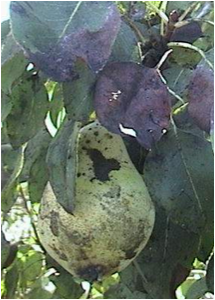
Damage caused by sooty mold on fruits
It is certain that any serious producers of pears, and the mere mention of pear fleas, go tingling, especially because we have in the production year with a lot of moisture and increased vigor, in terms of protection of pear fleas was extremely difficult . Many manufacturers have blundered, because the pest pressure was high, and a high humidity, led to a "dirtying" the fruits of sooty mold , and to practically economically worthless fruit. Unfortunately, only a small carelessness in a short time (2-3 days), can cause prenamnažanja pear fleas, the occurrence of older stage L4 and L5 , which are coated with honeydew , and it is practically impossible that the active substance reaches them and to destroy them . Unfortunately in this case, the manufacturer can only watch helplessly and wait for settlement of sooty mold. How is this situation would not have occurred, and to ensure that our producers would not be decided on the shrinkage of their plantations, it is a very good knowledge of the development cycle of this dangerous pest. For the above reasons I decided one place to summarize some facts about the life of this pest, its development cycle, and most favorable terms and most appropriate means for the effective control of this pest.

Calcium material and quality of cherries


Cherries orchards

For   us the production of cherries unfortunatelyinsufficient , and little producers decide to invest in the cultivation of cherries . Modernplantations can almost be counted on the fingers of one hand , and Slavonia is something more serious attempt to establish plantations in the wider area Aljmaš hills and in the area of Baranja. So far this very small area. One of the important factors in the production of cherries is the effect of Ca on quality andstorability of fruits. Until now, published a lot of scientific papers on the subject and all stand out unusually large , perhaps the key role of macro nutrients to the quality of the fruit cherries . A group of researchers from  Oregon State University revealed thattargeted treatments with calcium materials  in the vegetation, and after harvest can improve fruit quality cherries in terms of its storage capacity, as well as other qualitative characteristics. This is very important if the producers of cherries cherries are intended to be transported long distances. Researchers  have discovered a number of interesting information regarding the impact of calcium on different  skin defects cherries (splitting, pitting, grooving, posmeđenja).

Rain Induced sweet cherry cracking susceptibility - CAUSES AND POSSIBLE SOLUTIONS?

The fruits of cherries
The main source of losses in the production ofcherries are losses incurred   by shooting fruit and are caused by the rain. The classic symptoms  caused by  splitting the surface layer of the foreskin of the fruit (cuticle), mostly in the area of peteljkinog depressions, because there and builds up the most water, but can occur in other areas of the fruit . The fruits of course, lose their market value, and significantly reduced the financial result fruit growers. Efforts to  reduce  these losses, have led many a researcher is on finding a variety of solutions , which aim to reduce this type ofdamage . In some years, these tend to be damage and catastrophic proportions, and where up to 90% of the fruits are damaged and can be used in the production of juices , if the damage can not settle this causes rot(Monilia fructigena). It should be noted that until now have not exactly understood all the causes that lead to the cracking of fruit , but it is known that their intensity depends on the genetic trait certain varieties (size, strength skin color, shape of the fruit, lumber stomata, cuticle properties), the amount of water , osmotic pressure station , the water capacity of the fruit, the development stage, environmental factors and many other factors. It is well known that the variety Bing sensitive to cracking of the varieties   Van, Sweetheart, Lapins, or Rainier.  Researchers have tried to explain these differences by exploring all the factors that cause cracking process fruits, so that they developed the theory that, as the fruits begin to ripen so intensely growth, starch is converted to  sugar, the occurringchanges in the cuticle , have changes in heat , and as a consequence of all the above changes varies hydrostatic / osmotic pressure of the fruit . Large precipitation in the period of maturation with increased moisture and increased warmth , makes theosmotic pressure in the cells of the fruit increases to the point, when or fruit skin ie.expansion of its cuticle can not handle. According to this theory, the water in the fruit is transported outside the area of epidermis (raindrops), inward , and transport is based onthe difference in osmotic potential between the water on the surface of the liquid within the cuticle, and which cause sugars and other chemical substances. It is believedthat Different varieties have the cuticle which can also vary considerably in their ability toabsorb water, and cuticle ability to stretch (elasticity). Some studies have shown the presence of micro-cracks in the skin is sensitive varieties of cherries, and interpreted that perhaps these cracks may be beginning to facilitate the cleavage , which subsequentlyoccurs . Formerly it was thought that water uptake by the roots, has a significant impacton the cracking of fruit, but later research emphasis is given exclusively to water absorption through the cuticle epidermis of fruits, as the main reason for cracking the fruit.

Alternaria on apples (Alternaria mali)

Alternaria small apples photographed on the list in 2014 as
a plantation in the area of Posavina
We all know that the greatest damage in the intensive apple production caused all known scab(scab). But in recent yearsappears to us a recent disease called alternaria . This disease can cause, if not controlled, a lot of damage , and personally I predict that it will be only for her to hear in terms of losses in production, which will be caused by this, our fruit growers less famous fungus . Symptoms are visible on leaves and fruits . The disease attacks the apples but also pears . Last year, 2,014 years personally I recordedstrong attacks Alternaria small, in all localities where theholding rainwater over a long period, which led to increased defoliation of leaves , which ultimately resulted in the weaker return blossoming , as well as lower and higher quality crops. Last year I noticed the first symptoms of alternaria in one orchard pears . I noticed that our most victims varieties Gala , Golden Delicious and Braeburn, Pink Lady or other varieties if they are in conditions of high humidity and high temperatures show sensitivity. Since you all want to warn the danger that the apple production brings this disease , I decided to publish an excellent text on this subject and which is the author of our eminent expert in the field of crop protection  Dr. Milorad Subic ., which is hereby thankthe excellent article , which gives an excellent overview of our readers, in order to more closely acquainted with this disease .


Alternaria
Symptoms Alternaria fruit on G.Deliciousa
Photo : Sachbereich Ökoanbau, VZ Laimburg
 Just as I write this, I look at the reports from the meteorological station , where we can see how in the wider region of Slavoniafell from 100 to 200 liters of rain per square meter, and by a further 10 days, metorolozi announce the dry and hot weather, with daytime temperatures around 25 degreesand these are just excellent conditions for the developmentof this disease, because the evaporation of evil could be great, and are particularly at risk apple orchards where the retainedexcess rain water and where they are grown especiallysusceptible varieties . Of theactive substances for combatingalternarijske mottling on apples according to data from the FIS , with us is a registered combination (fluopyram + tebuconazole) - Luna , which is registered and for the suppression of Septoria on pears ( Stemphylium vesicarium ), which could also become a significant danger in our orchards of pears .